
Maldives' Airspace Sovereignty: 400,058 Square Nautical Miles of Controlled Skies from Northern Chagos Bank Northward
- Ibrahim Rasheed
- 10 hours ago
- 5 min read


The area from the northern half of the Great Chagos Bank northward to the Maldives includes very few actual islands. There is a gap of approximately 450–500 km (about 240–270 nautical miles) of deep open ocean with no permanent islands or dry land between the northernmost Chagos features and the southernmost Maldives atolls.
Islands on the Northern Half of the Great Chagos Bank
The Great Chagos Bank, locally known in Maldivian as ފެހޭނާވަރި Fehenaavari, is the world’s largest atoll structure (mostly submerged). Its northern half (northern fringe and northern/central-western rim) contains the following small, low-lying coral islands (listed roughly from north to south on the bank.
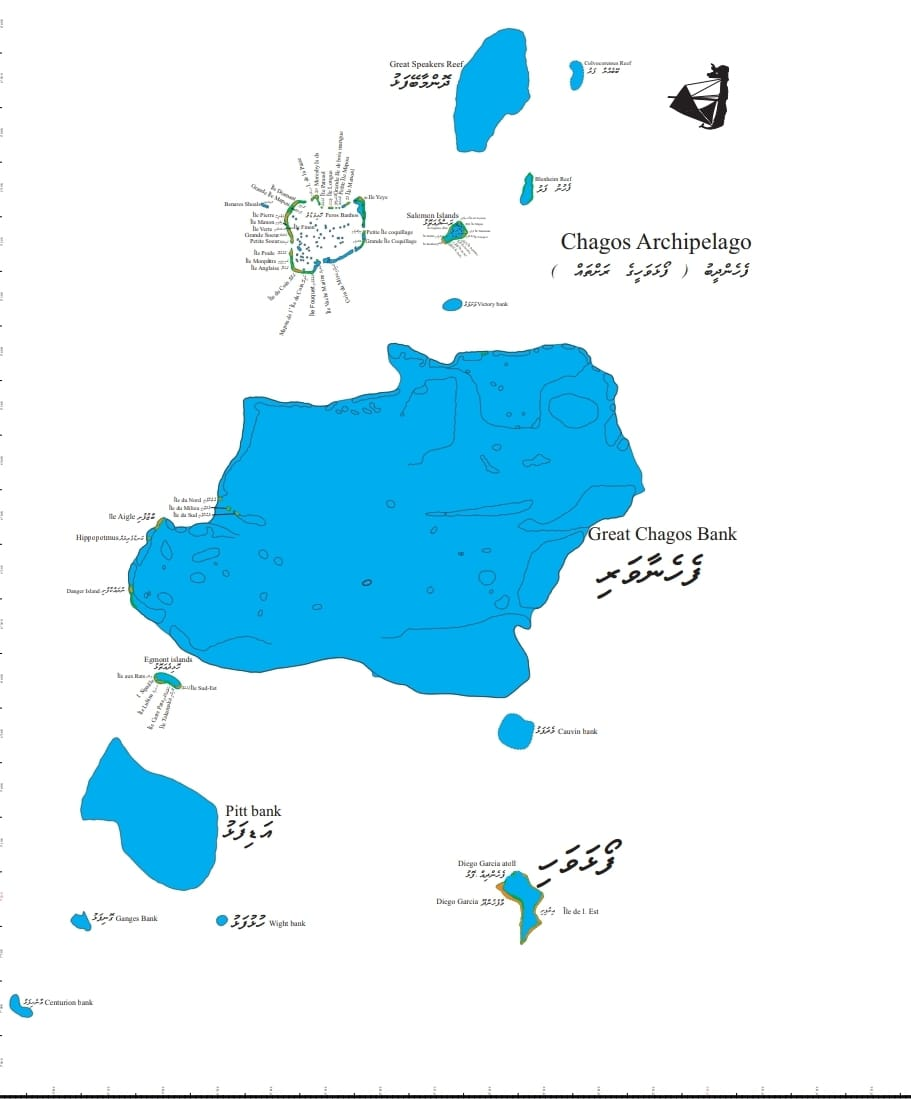
Three Brothers Islands (Trois Frères) group:
North Brother Island (Île du Nord)
Middle Brother Island (Île du Milieu)
South Brother Island (Île du Sud)
Resurgent Island (sometimes grouped with the Three Brothers)
Eagle Islands group:
Eagle Island (Île Aigle) the largest island on the Great Chagos Bank
Sea Cow Island (Île Vache Marine)
These islands are all tiny (total land area on the whole Great Chagos Bank is only about 5-6 km²), uninhabited, strictly protected as a nature reserve, and covered with coconut palms and other vegetation. Danger Island lies further south on the bank and is generally considered part of the southern half.
North of the Great Chagos Bank "Fehenaavari" (Towards Maldives)
Moving northward from the northern edge of the Great Chagos Bank, the next land features belong to other atolls in the northern Chagos Archipelago (still part of Chagos, but not on the Great Chagos Bank itself):
Peros Banhos , Locally Known as Kandhoo Atoll , Holhimadulu (one of the northernmost atolls in Chagos)
Salomon Islands atoll
Speakers Bank, Blenheim Reef, and other small reefs/banks (mostly submerged or with very small cays)
These northern Chagos atolls (Peros Banhos and Salomon) lie roughly 100–150 km north of the northern rim of the Great Chagos Bank.

Between Northern Chagos and Maldives
There are no islands in the open sea between the northern Chagos atolls (Peros Banhos / Salomon area) and the southern Maldives (Addu Atoll / Gan area). The sea is deep (over 2,000–3,000 metres in the channel), and this stretch forms part of the Male' FIR airspace that Maldives is responsible for.
The Maldives is a big ocean state island nation that shoulders one of the most expansive responsibilities in global civil aviation. Through the Maldives National Air Traffic Service (MNATS), operating under the Maldives Airports Company Limited (MACL) and regulated by the Civil Aviation Authority (CAA), the country is internationally obligated to provide Air Traffic Services (ATS) and ensure aviation safety across the entire Male' Flight Information Region (FIR) , designated VRMF. This FIR encompasses a vast oceanic expanse of 400,058 square nautical miles. This responsibility, exercised 24 hours a day, every day of the year, stems from Maldives' commitments under the Chicago Convention (1944) and ICAO Annex 11 - Air Traffic Services
The Male' FIR covers not only the airspace above the Maldivian archipelago but also extensive oceanic sectors extending south, west, and east, including the airspace from the northern half of the Great Chagos Bank northward. Its boundaries, established through ICAO regional agreements in the Asia/Pacific region, are functional for safe air navigation and traffic coordination, independent of ongoing maritime sovereignty disputes. Flights routing through this sector, including those near the northern Chagos features, operate under Male' FIR procedures, highlighting the practical importance of Maldives' role in maintaining seamless and safe international air traffic flows.
Recent political developments (2026): Maldives has rejected parts of the 2023 ITLOS maritime boundary ruling with Mauritius, withdrawn prior recognition of Mauritian sovereignty over Chagos, asserted stronger claims (referring to the area as “Foalhavahi”), and begun MNDF patrols in northern Chagos waters. These actions concern maritime zones (EEZ) and potential sovereignty over islands, not the ICAO-assigned FIR boundaries or ATS responsibilities. The Male' FIR continues to operate as designated for aviation safety.
UN Human Rights Experts’ Concerns on the 2025 UK-Mauritius Agreement and Discrimination over Chagossian Rights
In 2025, the UK Labour party Government signed a bilateral agreement on 22 May 2025 to transfer sovereignty over the Chagos Archipelago (including Diego Garcia) to Mauritius, while granting the UK a long-term lease (99 years, extendable by 40 years) to maintain the joint UK-US military base on Diego Garcia. As of March 2026, the agreement has not yet entered into force
Chagossian perspectives: Many in the Chagossian diaspora have voiced strong opposition to the deal, citing fears of discrimination, marginalization, and exclusion under Mauritian administration, as well as insufficient consultation. They emphasize rights to return (especially to Diego Garcia), reparations, cultural preservation, and self-determination. UN human rights experts and the Committee on the Elimination of Racial Discrimination have raised concerns that the agreement fails to adequately guarantee these rights, risks perpetuating historical injustices, and does not ensure meaningful participation or full remedy. Calls have been made for renegotiation or suspension to better address Chagossian concerns.
Maldives’ Historical and Cultural Connections to Chagos (Foalhavahi)
Maldivian sources and recent government statements highlight the strong historical ties to the Chagos Archipelago, traditionally known in Dhivehi as Foalhavahi, with Diego Garcia specifically referred to as Foalhavahi or similar variants. Key points often emphasized include:
The Maldives historically dominated the Indian Ocean currency, cowrie shell trade, serving as a foundational global currency for thousands of years.
Maldivian traders, alongside Arab merchants, supplied significant quantities of Cypraea moneta (cowrie shells) from the Maldives to East Africa, notably to Kilwa, Pemba, Laamu, and Zanzibar. By the 14th century, these shells were extensively used as currency in those regions.
The first documented European shipment of Maldivian cowries to West Africa took place in 1515, arriving in Benin (in the Bight of Benin, present-day Nigeria). Merchants, under Portuguese royal licenses, were permitted to import cowries from India (including the Maldives) duty-free as ballast.
By 1517–1519, cowries had reached São Tomé Island (a Portuguese base in the Gulf of Guinea) and were subsequently distributed to West African coastal forts and kingdoms such as Benin and the Gold Coast.
João de Barros, a notable Portuguese historian writing in 1563, noted that in certain years, 2,000–3,000 quintals (approximately 100,000–150,000+ pounds) of cowries were shipped to Portugal and then re-exported to Guinea, Benin, and Congo, where they served as currency.
This extensive maritime trade network highlights the Maldives’ historical impact across the central Indian Ocean, including routes through the Chagos waters, the southernmost part of Maldivian territory. Historical records indicate that the Maldives initiated or collaborated in establishing copra (dried coconut) plantations on the Chagos/Foalhavahi atolls, including Diego Garcia, during the period when the Maldives were allied with French East India Pondicherry.
In the early phase (beginning of the 19th century, during the reign of early kings like Semakokiro or his successors), cowries were highly valuable due to their scarcity. It is noted that "two cowrie shells could purchase a woman," reflecting their significant purchasing power in human transactions (such as slavery or bride wealth contexts) and other goods.
Maldivian Monetaria moneta became a predominant currency in Buganda during the 19th century, introduced by Arab/Swahili slave and ivory traders from the Zanzibar coast, who ventured into the interior via caravan routes to Buganda by the early 1800s.
In short, Maldives' control of the 400,058 sq NM from the northern Great Chagos Bank northward is a delegated international duty for civil aviation safety under the Chicago Convention (particularly Article 28) and ICAO Annex 11. It is separate from the heated debates over Chagos sovereignty or maritime boundaries. This role underscores Maldives' significant contribution to global air navigation despite its small land size.


Comments