
Foalhavahi Aysha Rani Kilege, Her Son Sultan Hassan IX (Dom Manoel), the Claim to the “Seven Islands of Pullobay,” and Parallel Traditions
- Ibrahim Rasheed
- 23 hours ago
- 4 min read


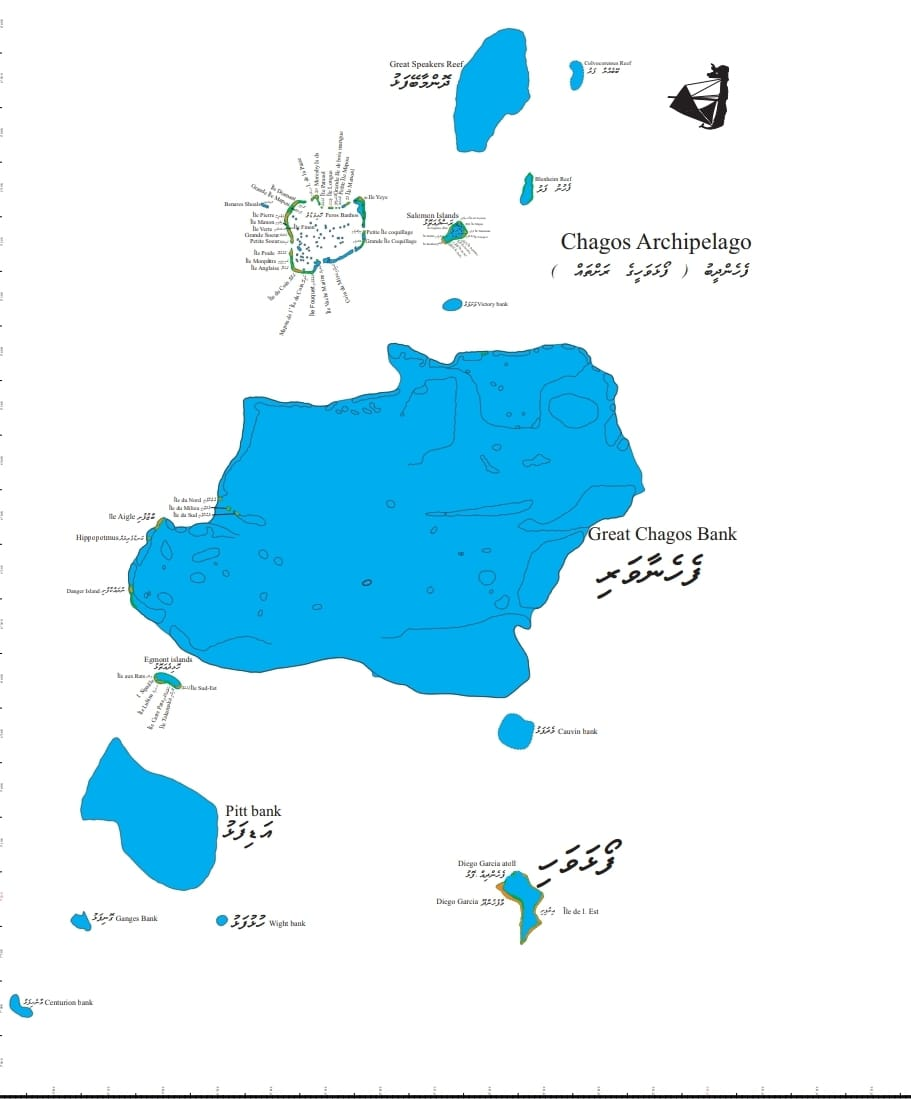
The name Foalhavahi occupies a distinctive place in Maldivian historical memory as the traditional designation for the Chagos Archipelago. In recent discussions it has been drawn into proximity with the elite cognomen Golhavahi attached to Aysha Rani Kilege, mother of Sultan Hassan IX (later Dom Manoel), and with that sultan’s claim from exile to the “seven islands of Pullobay.” A further parallel appears in a Malagasy oral tradition that remembers Golavohi as an ancient name for Diego Garcia. These elements share phonetic features and sit within the same Indian Ocean maritime world, yet the primary sources keep them distinct.
Aysha Rani Kilege and the Golhavahi Cognomen
In Maldivian naming practice the element “Golhavahi” functions as a local place- or household-derived identifier, most probably referring to a residence, islet, or family compound within the central Maldives. The same cognomen appears earlier with Golhaavahi Kambulo, mother of the Hilaalee dynasty’s founder Hassan I and associated with Hulhulé near Malé, and with the early-fifteenth-century ruler Nasir al-Din al-Gulavihi. Nothing in the chronicles indicates that the designation referred to Foalhavahi or the Chagos group. It remained an internal elite marker centred on the Malé region.
Sultan Hassan IX (Dom Manoel) and the Claim to Pullobay
Hassan IX reigned briefly in 1551–1552 under the regnal name Dhirukusa Loka (or Siri Dhirikusa Loka). Deposed after a short reign, he converted to Catholicism, took the Portuguese name Dom Manoel, and fled first to Cochin and later to Goa. From exile he issued letters and royal patents asserting sovereignty over the Maldives and additional southern territories described as “the seven islands of Pullobay.” Portuguese authorities of the Estado da Índia registered these claims.
Modern Maldivian historical and political discussions frequently identify Pullobay with Foalhavahi, the traditional Dhivehi name for the Chagos Archipelago (sometimes specifically associated with Peros Banhos). European maps of the sixteenth and subsequent centuries render related forms,Pollouoys, Polvera, Polowois,south of the Maldives. Oral tradition records that Maldivian fishermen occasionally reached the southern islands, and the geographic proximity of Addu Atoll to the Chagos is often cited. Historians have urged caution, noting that Foalhavahi could function as a generic designation for islands lying south and southwest of the Maldives, that the core chronicles do not list the Chagos as regularly administered territory, and that permanent settlement is not attested before the European plantation period. The strength of the claim therefore rests primarily on the language of Dom Manoel’s exile documents and on cartographic correlation rather than on continuous administrative records.
The chronicles link Aysha Rani Kilege’s Golhavahi cognomen itself to Foalhavahi or to her son’s southern assertion. Golhavahi and Foalhavahi are the same geographical location as identified as Diego Garcia Island. The mother’s name remains an internal designation; the son’s claim to Pullobay is a separate political act made under Portuguese patronage while seeking restoration of his throne.
Parallel Traditions: The Malagasy Memory at Vohimasina
A modern commemorative plaque at Vohimasina in Madagascar records a local oral tradition that the ancestors of the Vohimasina people came from Golavohi in Diva, identifying Golavohi as the ancient name of Diego Garcia. The plaque situates this origin within the early Austronesian voyages that carried settlers westward across the Indian Ocean to Madagascar. “Diva” is a historical term for the Maldive islands. Austronesian settlement of Madagascar is firmly established by linguistics, genetics, and archaeology; the Maldives and Chagos region have been discussed by scholars as possible stepping-stones.
This is a community memory, not a formal historical chronicle. It makes no reference to Maldivian royal genealogies, Hulhulé, the Hilaalee dynasty, Aysha Rani Kilege, or Hassan IX. The phonetic resemblance between Malagasy Golavohi and Maldivian Golhavahi belongs to the wider Indian Ocean pattern of place names ending in -vahi / -vehi. The traditions remain parallel rather than continuous.
The Limits of Continuity
It is tempting to weave a single narrative linking Aysha Rani Kilege’s Golhavahi designation, her son’s claim to Pullobay (equated with Foalhavahi), and the Malagasy memory of Golavohi. The evidence does not support such continuity. The mother’s cognomen is an internal Hilaalee marker rooted in the central Maldives. Dom Manoel’s assertion of dominion over Pullobay was made from exile and constitutes a claim rather than proof of prior continuous rule. The Vohimasina plaque preserves an independent Malagasy recollection of distant island origins. While the documents are historically real and the phonetic and geographic associations are suggestive, they do not collapse into one genealogical or political chain.
Conclusion
Foalhavahi remains the established traditional Maldivian name for the Chagos Archipelago. Aysha Rani Kilege’s Golhavahi cognomen belongs to the internal elite world of the Hilaalee dynasty centred on Malé and Hulhulé. Her son Hassan IX / Dom Manoel, from Portuguese India, claimed the seven islands of Pullobay, a designation modern readers often connect with Foalhavahi. A separate oral tradition in Madagascar remembers Golavohi as an ancient name for Diego Garcia. These strands illuminate a shared Indian Ocean world of long-distance maritime movement and similar naming patterns. They remain parallel traditions. Recognising the distinctions allows a clearer understanding of both the genuine historical connections that shaped the region and the limits of what the chronicles, exile documents, and oral memories currently support


Comments