
Maldivian Naming Conventions, the Golhavahi Designation, and Its Distinction from Foalhavahi
- Ibrahim Rasheed
- 2 days ago
- 6 min read

Updated: 56 minutes ago
In traditional Maldivian society, personal names frequently incorporated references to geographical origin. Individuals, particularly those of noble or royal status, were often identified by the island, islet, house, or locality of their birth or family association. This practice reflected the archipelago’s dispersed island geography and the central importance of place in establishing lineage, status, and identity. Suffixes or elements such as “-vahi,” “-vehi,” or similar forms commonly denoted connection to a specific settlement or family compound. Against this background, the recurring appearance of the name Golhavahi (also rendered Golavehi, Golaavahi, Goalhavahi, or Gulavihi) in historical records raises an interesting question: while the naming convention strongly suggests a place-derived identifier, no island bearing this exact name is recorded among the inhabited or historically attested islands of the Maldives themselves.
The name Golhavahi surfaces in the genealogies of the Hilaalee dynasty. One of the clearest examples is Golhavahi (or Golaavahi Foalavehi) Aysha Rani Kilege, the mother of Sultan Hassan IX. Hassan IX, who reigned briefly in 1551–1552 under the regnal name Dhirukusa Loka (or Siri Dhirikusa Loka), later converted to Christianity and took the Portuguese name Dom Manoel (or Dom Manuel). His father was Prince Omar (Umar or ʿUmar) Maafaiy Kilege (also called Omar Maafaiy Kilegefaan or Prince ʿUmar Maʿafai Kilege), a son of the prominent Sultan Kalu Muhammad Hilali (also known as Mohamed the Black or Siri Dhammaru Bavana). Thus Hassan IX’s maternal designation as the son of a Golhavahi or Foalhavahi lady placed the name squarely within the interconnected royal network of the mid-sixteenth century. The same place- or family-derived element appears earlier in Hilaalee records, most notably in association with Golhaavahi or Foalhavahi Kambulo, linked to the mother of the dynasty’s founder, and in the title of Sultan Nasir al-Din al-Gulavihi (regnal name Veeru Abaarana), who ruled from 1409 to 1411 and is recorded as having introduced aspects of the Islamic penal code.

In the Arabic chronicle known as the Tarikh (Tarikh Islam Diba Mahal), the designation appears in a form that has been read as القلاونى. Careful examination of the manuscript tradition and comparison with standard English renderings of the sultan lists confirm that this is the Arabic rendering of al-Gulavihi (or al-Golhavahi / al-Goalhavahi). It refers specifically to the early-fifteenth-century ruler Nasir al-Din al-Gulavihi and aligns with the same onomastic element that later attaches to Aysha Rani Kilege. The orthographic variation is consistent with the challenges of rendering Dhivehi place and family names in Arabic script, where letters such as ق or the placement of dots, can produce ambiguous readings in handwritten manuscripts. Importantly, this form is distinct from any rendering of Foalhavahi.
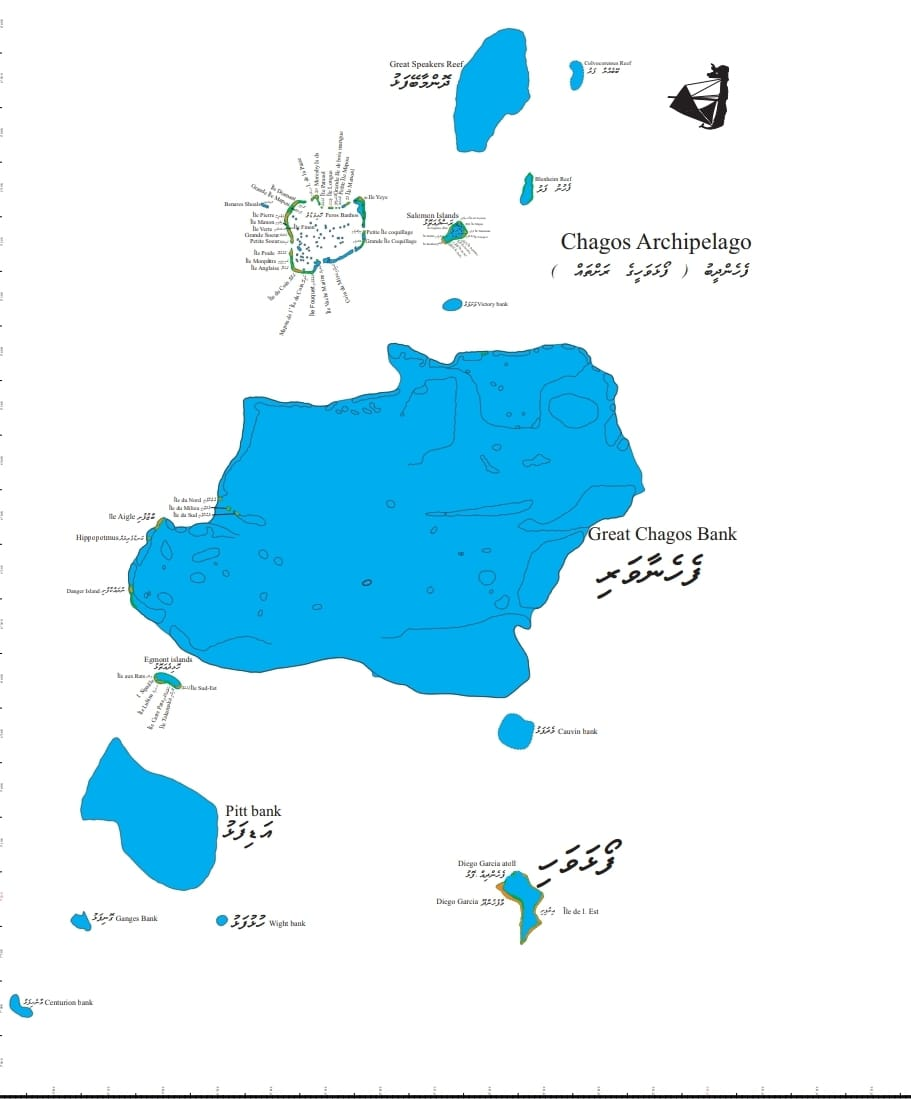
Foalhavahi (also written Folhavahi, Hollavai, or similar variants) is a well-attested Maldivian name for the Chagos Archipelago and, in broader traditional usage, for islands lying south and southwest of the Maldives. European cartography of the sixteenth and seventeenth centuries recorded it under forms such as Pollouoys, Pullobay, Polvera, or Pollawasi. These Portuguese and later French and Dutch map spellings are widely understood as attempts to capture the Dhivehi pronunciation, sometimes influenced by the Malay word pulo (“island”). Foalhavahi therefore refers to a distant island group outside the core Maldivian atolls. No historical source equates it with Golhavahi.
A hypothesis has sometimes been advanced that the form Golhavahi might result from a scribal “dot error” in Arabic manuscripts, whereby the single-dot letter ف (fāʾ, “faafu”) was mistakenly written or read with two dots and thus transformed into ق (qāf), turning an original Foalhavahi into Golhavahi. While it is true that dots in handwritten Arabic can be faint, missing, misplaced, or added by later copyists, and that such confusions do occasionally occur, this explanation does not withstand scrutiny.
The form that appears in the Tarikh is therefore best understood as a manuscript rendering of الغولاهوى or الغلاوهى (al-Gulāwahī / al-Golhavahi). This matches the consistently attested Maldivian place- or family-derived name found in the royal genealogies. The orthographic variation is typical of how Dhivehi names were written in Arabic script during the period.
but In the Arabic text of the Tarikh, the letter rendered as “gaaf with two dots” (ق — qāf, the Arabic letter that has two dots above) is the deliberate orthography used for the “g/q” sound in Golhaavahi / Golāvahi / Golavahi. It is not a scribal error or typo.
Connection to Diego Garcia
Golāvahi (also spelled Golavahi, Golavohi, Golhaavahi) is an ancient Maldivian (Dhivehi) name for the island now known as Diego Garcia, the largest island in the Chagos Archipelago.
It appears in older Maldivian historical texts such as the Raadhavalhi.
Golāvehi referred to the people associated with that place.
The broader Chagos group was known to Maldivians as Foalhavahi (northern form) / Hollavai (southern form).
“Golhavahi Kamana / Kambulo”In the genealogies of the Hilaalee dynasty (starting with Sultan Hassan I, r. ≈ 1388–1398), the mother is recorded as Golhaavahi Kambulo (or Kalavahi Kabulo / Golavehi Kabulo, sometimes rendered with “Kamana”). This indicates a link (by origin, residence, or title) to the place called Golhaavahi i.e., the ancient Maldivian name for Diego Garcia. Some traditional accounts also describe her as a woman of noble household (Kalavehi ≈ “noble residence”) and an astrologer. Because the Tarikh repeatedly traces the Hilaalee royal line back to her, the name appears frequently.
The Arabic spelling with the two-dotted qāf (ق) simply reflects how Maldivian writers of the 18th century transcribed this non-Arabic place-name and personal name into the Arabic script of the chronicle.
It is intentional and consistent with the historical identification of Golhaavahi as Diego Garcia Island of Chagos Archipelago.
The mother of Sultan Hassan IX (Dom Manoel), Foalhavahi or Golhahavahi Aysha Rani Kilege, and the earlier Sultan Nasir al-Din al-Gulavihi both illustrate its use within the Hilaalee lineage. The Arabic form القلاونى in the Tarikh is best understood as a manuscript rendering of al-Gulavihi. Likewise, the specific “as-Shirazi” cognomen attached to Sultan Hassan VIII continues to be recorded in the chronicles as deriving from his mother Fatima Dio of swahili Shiraz . Shared trade, technology, and cultural exchange enriched both regions, but they do not rewrite the internal Maldivian genealogical and onomastic evidence.
Why the similar names appear: Golhavahi in the Dhivehi Tarikh and Golavohi in the Vohimasina tradition
The resemblance between Golhavahi (the cognomen used in the Tarikh Islam Diba Mahal and Raadavali for Aysha Rani Kilege and earlier Hilaalee figures) and Golavohi (the ancestral place named in the Vohimasina oral tradition in Madagascar) is real and striking. However, the two uses of the name come from completely independent sources and do not refer to the same historical reality.
Note: Golhavahi / Golhaavahi Kambulo in the Tarikh Islam Diba MahalIn the Arabic chronicle Tarikh Islam Diba Mahal (compiled by Hasan Taj al-Din in the early 18th century) and the related Dhivehi Raadavali, Golhaavahi Kambulo (also rendered Golavehi Kabulo, Golaavahi Kambulo, Golhaavehi Kanbulo, or Kalavahi Kabulo) is recorded as a foundational figure in the genealogy of the Hilaalee dynasty.She was the mother of Sultan Hassan I (Sri Dhiru Buwana Maha Radhun / Bavana), the first sultan of the Hilaalee line (r. c. 1388–1398), and the wife of Kulhiveru Hilalu Kaivulanna Kaloge (Hilaaly Kalo), son of Muslim Abbas of Hulhulé. Oral tradition places the couple on Hulhulé island near Malé and sometimes describes her as an astrologer with possible links to the preceding Lunar dynasty.The cognomen Golhavahi / Golhaavahi / Golaavahi recurs across generations in the same sources: with Kambulo herself in the late 14th century, with the early-15th-century sultan Nasir al-Din al-Gulavihi (Veeru Abaarana), and later with Golhavahi Aysha Rani Kilege, mother of Sultan Hassan IX (Dom Manoel). This repeated use reflects a typical Maldivian elite naming practice in which a place- or household-derived element (“of the Golavehi / noble residence”) served as a marker of status and origin within the central atolls.The chronicles treat the name as an internal Maldivian designation and do not equate it with Foalhavahi (the traditional name for the Chagos Archipelago) or with the separate Malagasy oral tradition of Golavohi as an ancient name for Diego Garcia. The multiple appearances therefore confirm a genuine, multi-generational Hilaalee family or household name rather than a scribal error or a reference to a distant island group


Comments