
Rukugai Thahjehun: The Foalhavahi , Chagos Expeditions of Kerafa Alifulhu and the Art of Equitable Coconut Stewardship
- Ibrahim Rasheed
- Feb 20
- 4 min read

Updated: Feb 25

The coconut palm, revered in the Maldives as Dhivehi ruh, transcends its role as mere vegetation to embody the nation's soul, resilience, and way of life. As the national tree and a central motif in the Maldivian emblem, this versatile palm has sustained generations through food, shelter, tools, construction materials, and economic trade. In a scattered archipelago where land is precious and resources finite, careful stewardship of coconut groves was essential. One of the most distinctive yet understated traditions that ensured this balance was Rukugai Thajjehun (ރުކުގައި ތައްޖެހުން)—the practice of marking trees to distinguish government-owned (ރުއްގަހާ or state coconut trees) from privately owned ones (އަމިއްލަ ރުއްގަސް).
This forgotten tradition of accountability and communal stewardship represents Maldivian ingenuity in resource governance. It blended official oversight, family participation, and simple yet permanent markings to protect a tree that defined island existence. Among those who carried this custom forward was Kerafa Alifulhu, whose expeditions and dedication left an enduring mark on Maldives’ coconut heritage.
Note: Kerafa Dhandahelu is the father of Kerafa Alifulhu. He was likely born during the reign of Sultan Muhammad Imaaduddeen IV, who served from 1835 to 1882/1883, marking the longest tenure of any sultan in Maldivian history.
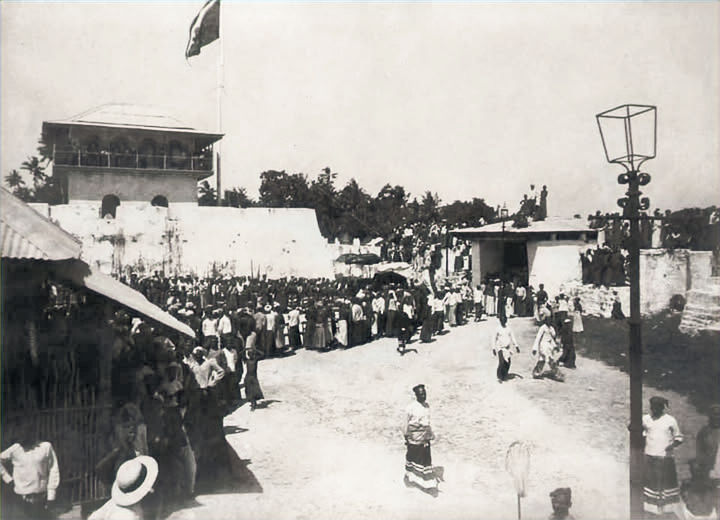
Until the early 20th century, historical records show that annual survey teams departed from Malé to inspect and count coconut plantations across atolls, including remote and uninhabited islands. These systematic journeys maintained inventories of a key economic asset, coconuts for copra exports, coir, toddy, and local use, while preventing disputes in a society where trees were often communally oriented but individually tended.
The marking process was practical and effective. Survey teams made cuts or notches on the upper trunk (near the crown) or base, then inscribed a distinguishing symbol, letter, or government insignia. State-owned Coconut trees bore one specific mark, while private ones remained unmarked or received a variant notation. This visible identifier allowed anyone harvesting or tending coconut trees to recognize ownership instantly, minimizing conflicts, theft, or overexploitation. Such expeditions required skilled navigators, local experts, and intergenerational involvement. Families with seafaring knowledge and island familiarity were vital participants in these foalhavahi trips journeys that sometimes extended to distant areas with historical Maldivian connections, such as the Chagos Archipelago.
The British acquired Diego Garcia and the surrounding Chagos Archipelago through the 1814 Treaty of Paris, which was signed following the defeat of Napoleon Bonaparte. This treaty formalised the transfer of several French colonial possessions in the Indian Ocean—including Mauritius (then known as Île de France) and its dependencies, of which the Chagos Archipelago was one—to British contro to Sultan Muhammad Shamsuddeen Iskander III in 1935.

Kerafa Alifulhu truly demonstrated what it means to be part of the community. He was hands-on with the surveys, playing a major role in keeping the tradition alive and ensuring its proper execution year after year. His son, Mohamed Kerafaa Kaleyfaan, watched these inspections as a child and learned first-hand how important it is to manage resources well and fairly. Later on, Kerafa Alifulhu remained actively involved by taking his own son, Kerafa Mohamed Kaleyfaan, on some of the major foalhavahi trips, including that key journey to the Chagos Archipelago for Rukugai thahjehun inspections.
These far-reaching Foalhavahi voyages highlight the tradition's scope beyond inhabited clusters to distant territories historically connected through Maldivian maritime claims and resource interests. The involvement of Maldivian sailors and pilots in earlier European surveys, such as Moresby's, underscores a long-standing tradition of local expertise facilitating exploration and resource management in the region. Kerafa Alifulhu’s participation bridged generations, passing down not only navigational skills but also a deep sense of duty to equitable governance. His legacy embodies how ordinary Maldivians, through family involvement and personal commitment, upheld central authority while safeguarding local rights.

Equitable Groves: Balancing State and Private Ownership
The primary aim of Rukugai Thajjehun was administrative clarity: to separate state-owned Coconut trees from private property. This distinction regulated harvesting rights, supported government revenue from vital exports like copra during the sultanate era, and curbed unauthorized use. It reflected deeper principles of fairness in Maldivian society, land and trees were communal in spirit yet allowed individual initiative, necessitating mechanisms to harmonize personal and collective needs.

Annual surveys promoted accountability, preserved records for resolving disputes, and reinforced governance over dispersed islands. In an era of limited modernization, this practice demonstrated foresight in managing natural assets amid isolation and environmental constraints. Though the tradition faded with evolving land laws, tourism growth, and new challenges like tree diseases, its essence persists. Modern government efforts to rehabilitate coconut groves on uninhabited islands and protect the national tree echo the same stewardship values.

Marking the Dhivehi Ruh through Rukugai Thajjehun stands as a quiet testament to Maldivian wisdom a tradition that protected heritage through foalhavahi voyages, family legacies like that of Kerafa Alifulhu and his descendants, and enduring marks on the trunks of palms. Kerafa Alifulhu’s story reminds us how individual dedication and community spirit sustained communal resources in an island nation defined by adaptation and endurance.
As the coconut palm continues to symbolize national identity, preserving the memory of such practices honors the foresight that allowed the Maldives to thrive. In remembering Kerafa Alifulhu’s legacy, we recognize that true stewardship lies not just in the marks on trees, but in the hands and hearts of those who ensured equitable groves for generations to come.
Note: Kerafa Dhandahelu likely born during the period of Sultan Muhammad Imaaduddeen IV (who reigned from 1835 to 1882/1883, the longest-serving sultan in Maldivian history).
During the sultanate era in the Maldives, the title "Dhandahelu" was used to denote a Captain (Master).
Additional Notes: Until the early 1900s, coconut oil was a highly esteemed and valuable oil, extensively utilized for lighting lamps, cooking, and industrial soap production before the widespread use of petroleum and other vegetable oils. Copra, the dried coconut meat, was crucial for extracting this oil, which offered a clean-burning and long-lasting light.


Comments