
The Forgotten Traditional Maldivian Method of Counting and Marking Coconut Trees: Rukugai Thah Jehun

Updated: Jul 25

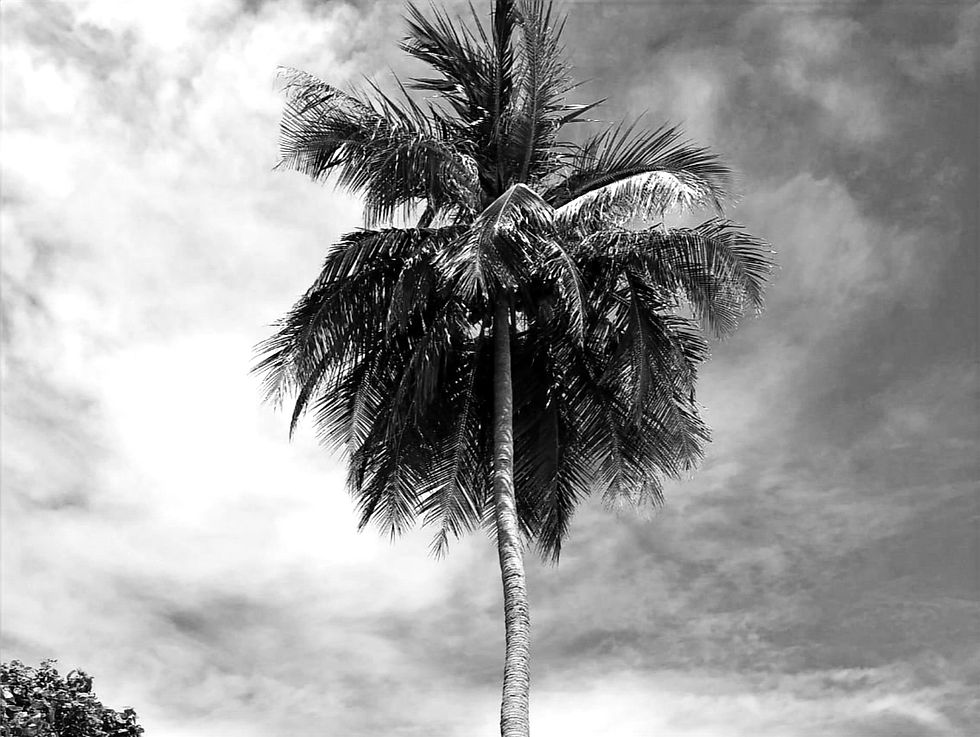
In the Maldives, the coconut palm, known as Dhivehi Ruh (ދިވެހި ރުއް), has always been far more than a tree. It is the “Tree of Life,” a living resource that once supplied almost everything an island community needed: food, drink, shelter, rope, timber, and even medicine. Because so many of these valuable palms grew on communal land, beaches, and pathways outside private compounds, a clear and lasting system of ownership was essential. That system was called Rukugai Thah Jehun (ރުކުގައި ތައް ޖެހުން), literally “striking the mark on the trees.”
Carefully records this practice, which remained in official use until 1976. Today it is largely forgotten, yet the circular scars still visible on a few ancient trunks stand as silent witnesses to an elegant indigenous solution.
What Was Thah Jehun?
Thah Jehun was the traditional method of counting and permanently marking coconut palms and breadfruit trees that grew in public or semi-public spaces. It created a visual public record of ownership that anyone could read simply by looking at the trunk,no paper, no registers, no literacy required.
How the Marking Was Done
A special steel tool was used: a cylindrical metal tube with a handle on one end and a sharpened cutting edge on the other. An official would place the edge against the tree trunk and strike the handle firmly with a hammer. The blow cut a clean circular or notched mark,thah,into the bark and outer wood. These permanent stamps were usually placed at roughly the same height on every tree, making them easy to see and count.
The Ownership CodeThe number of stamps followed a precise traditional code:
1 thah – Owned by an individual
2 thah – Owned by the community / people of the island
3 thah – Owned by the government
4 thah – Jointly owned by the government and the people of the island
5 thah – Trees planted for shrines or religious purposes
This five-mark system allowed instant recognition of ownership rights and helped prevent disputes over one of the islands’ most precious resources.
Cultural and Practical Importance
Coconut trees were (and remain) extraordinarily valuable. Every part was used, young nuts for drinking water, mature nuts for cooking and oil, leaves for thatching and mats, husks for coir rope, trunks for houses and Dhoni boats, and flower spathes for sweet toddy (raa). On narrow islands where land was shared, a reliable ownership system was vital.
Rukugai Thah Jehun is also a fine example of Maldivian ethnomathematics: a practical, non-written counting and classification system developed by the community itself. It combined resource management, legal clarity, and simple visual communication long before modern record-keeping existed.

The End of the Practice
Physical stamping of trees officially ended in 1976. Responsibility then passed to island offices, which now keep written or digital registers and report to the Ministry of Fisheries and Agriculture. Individual owners must register the trees they claim. Yet on some islands, the old thah marks can still be found on very old coconut palms,living historical evidence of a forgotten administrative art.
Conclusion
Rukugai Thah Jehun was more than a marking system. It was a quiet language written on living bark,a practical, elegant expression of how Maldivians once organised their most important natural resource. By preserving this knowledge in Dhivehi Dhiriulhun, we keep alive a small but meaningful chapter of traditional island life: the time when ownership of the Tree of Life could be read, counted, and understood simply by walking past a trunk and counting the marks.
Source: "Dhivehi Ruhthkah Thaazaa Kameh" by Mohamed Amin Didi
"Dhivehi Dhiriulhun" by Ha.Utheemu Adam Abdulrahman


Comments