
The Mausoleum of Bodu Thakurufaanu: “Behrouz Kamana” or Fathuma Dio from Shiraz?
- Ibrahim Rasheed
- Apr 27
- 6 min read


The Noble Heritage and Eternal Resting Place of Sultan Ghazi Muhammad Thakurufaanu al-Auzam: Hilaaly Blood, Shirazi Prestige, Indian Ocean Connections, and the Hilaalee-Utheemu Dynastic Link
Sultan Ghazi Muhammad Thakurufaanu al-Auzam, revered across the Maldives as Bodu Thakurufaanu, is the archetypal national hero. In 1573, he and a small band of fighters expelled the Portuguese after fifteen years and six months of oppressive occupation, restored Islamic sovereignty, and established the Utheemu Dynasty. His military brilliance, strategic genius, and unshakeable faith are legendary, but these qualities were deeply rooted in a noble heritage that combined ancient Maldivian royal blood, Persian cultural prestige, and the interconnected world of the Indian Ocean. This heritage not only legitimized his leadership but also created a seamless bridge between the long-ruling Hilaalee Dynasty and the new Utheemu Dynasty.
Hilaaly Blood: The Foundation of Legitimacy
Muhammad Thakurufaanu belonged to the Utheemu Thakurufaan family of Utheemu island in Haa Alif Atoll (Thiladhummathi Atoll). The family traced its lineage to the Hilaalee Dynasty, which had governed the Maldives for over 170 years (1388–1573). He was the great-grandson of Kalhu Hassan Kaleyge of Baarah, a Hilaalee noble and contemporary of early sultans such as Siri Bavana Sooja (Abubakur I) in the mid-15th century. This distant blood connection placed Muhammad, his father Katheebu Husain (Kalhu Ali Khatheeb Thakurufaanu), and his brothers Ali and Hassan Thakurufaanu within the broader royal nobility.
The link was further strengthened through Sultan Kalhu Mohamed Rasgefaanu (Kalhu Muhammad Hilali), who ruled across three reigns from 1491 to 1529. As a direct descendant of the same Hilaalee line, Kalhu Mohamed was a distant cousin to the Utheemu brothers. Muhammad Thakurufaanu was born in 1535 in Utheemu during or shortly after Kalhu Mohamed’s final reign, imbuing his generation with a living memory of pre-Portuguese royal continuity. When the Portuguese martyred Sultan Ali VI in 1558, the people of the northern atolls turned to the Utheemu brothers not as outsiders, but as legitimate heirs of the Hilaalee tradition.
Shirazi Prestige and Royal Marriage Alliances
The prestige of the Hilaalee line reached its cultural height through the Shirazi connection. Sultan Hasan al-Shirazi VIII (Ran Mani Loka / Sirazi), who ruled 1529–1549, was the son of Sultan Kalhu Mohamed and his Persian concubine Fatuma Dio from Shiraz. The title “al-Shirazi” symbolized refined Persian-Islamic scholarship, arts, and maritime sophistication that Fatuma Dio brought into the Maldivian court. Closer ties were forged through marriage. Princess Aisha Kabafa’anu, daughter of Sultan Kalhu Mohamed and half-sister of Sultan Sirazi, married Sultan Ali VI. Their daughter, Sitthi Mariyam Maavaa Kuda Kamanafaanu Rani Kilege, became the vital bridge. Shortly after the liberation in 1573, she married Hassan Thakurufaanu, one of the heroic Utheemu brothers. This union infused the Utheemu line with direct, immediate blood from Sultan Kalhu Mohamed’s family. Their daughter, Kuda Kalu Kamanafaanu (Kalhu Kamana), later served as Regent (1607–1609), further embedding the connection.
The mother of Sultan Hasan al-Shirazi VIII (Ran Mani Loka / Siri Ranmani Loka) was Fathuma Dio. Some local traditions associate the broader Machchangolhi ward (Rahdhebai Magu / Sirazi Gaolhi area) and the Bihuroazu Fashana Kalo, mosque or Bihuroazu Kamanaa Mosque cemetery with Hilaalee-era nobles and Shirazi-linked figures. However, there is no confirmed evidence that Fathuma Dio is buried there. The mosque’s fame comes almost entirely from the mausoleum of Bodu Thakurufaanu and his companions.

Status as a Concubine and King's Mother
In the Maldivian royal system of the Hilaalee period (and in many Indian Ocean Islamic courts), the mother of a sultan held very high status, even if she had entered the household as a concubine rather than a formally married queen.
As a concubine (not a principal queen), her status, while important for giving birth to a sultan, may not have warranted a prominent public tomb.
She lived in the early-to-mid 16th century (during Sultan Kalhu Mohamed’s reigns, 1491–1529). The chaotic period of Portuguese pressure and occupation (1558–1573) likely led to the loss or destruction of many records and graves.
The recurring royal titles Kamanafaanu / Kamana and references to “Sirazi Kamana” in local traditions elegantly blend Shirazi heritage with these noble women.
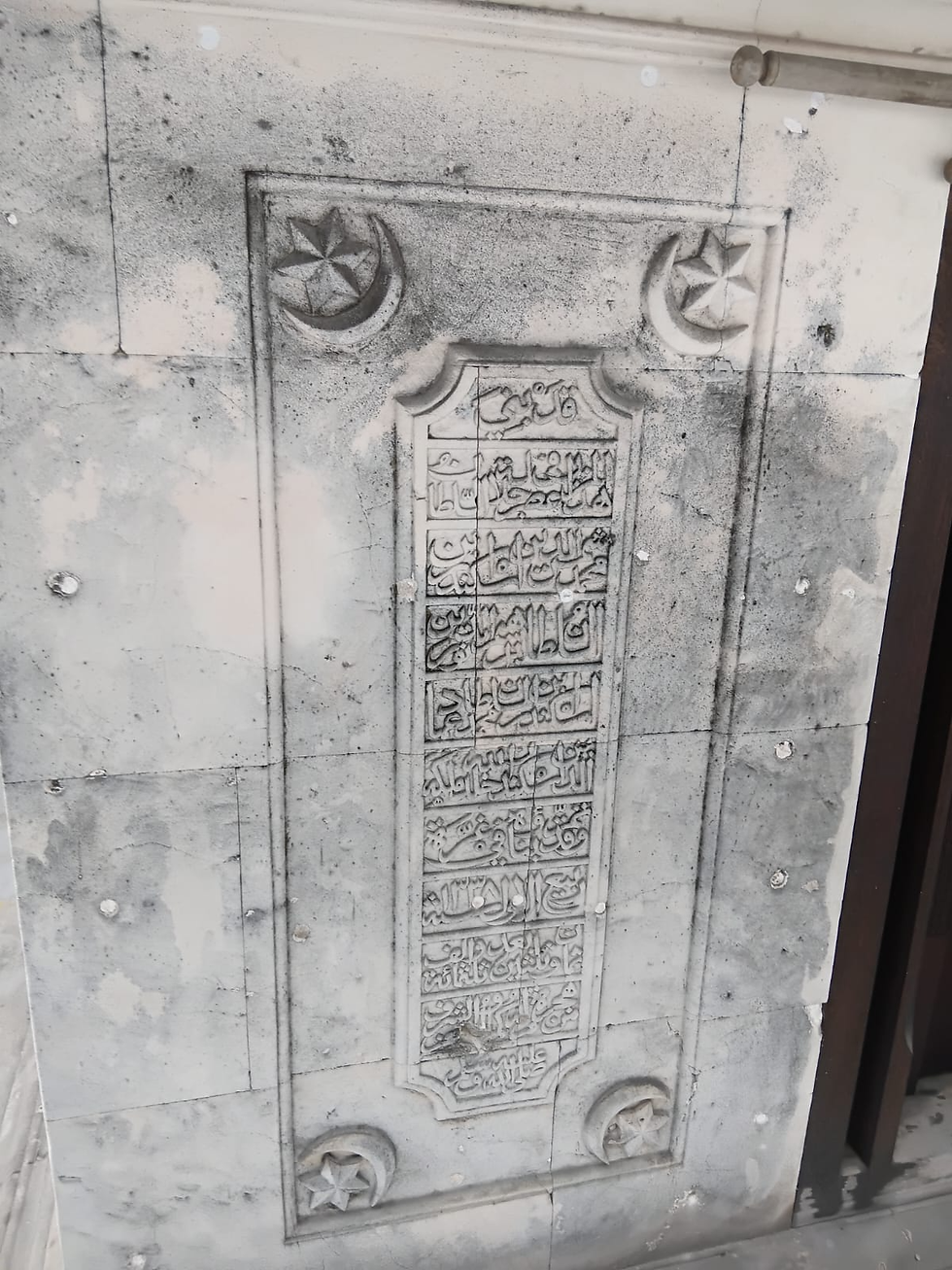
The Mausoleum of Bodu Thakurufaanu: “Bihuroazu Kamana” or “Sirazi Kamana”
This intertwined legacy finds its most poignant physical expression in the historic Bihuroazu Kamanaa Mosque (Bihuroazu Kamanaa Miskiy) and its adjoining mausoleum in Malé’s Machchangolhi & Galolhu ward, at the intersection of Rahdhebai Magu and Neeloafaru Magu. One of the oldest coral-stone mosques in the capital, built before 1573 in classic thelihigaa style, the mosque houses the eternal resting place of Sultan Ghazi Muhammad Thakurufaanu al-Auzam, who died a natural death on 18 August 1585 (1 Ramadan 993 AH).
Many of his companions, including Dhandahelu, from the liberation struggle are believed to lie nearby. The site, often called “Bihuroazu Kamana” or “Sirazi Kamana” in oral traditions, serves as a living monument where the hero’s victory, Hilaalee royal blood, and Shirazi prestige converge. The Maldivian flag flies here as a symbol of national gratitude, and the ziyaarat remains a major pilgrimage site.
Core Site: Bihuroazu Kamanaa Mosque + Bodu Thakurufaanu Mausoleum at Neeloafaru Magu / Rahdhebai Magu intersection, Machchangolhi & Galolhu ward.
Nearby: Sirazi Gaolhi (Shirazi-linked lane) and historic noble residences and Sultan Sirazi Mausoleum
Sultan Ali Rasgefaanu (Ali VI) Palace Residence :
Ali Rasgefaanu (Sultan Ali VI), the king martyred by the Portuguese on 19 May 1558, had his main royal residence in the central palace complex of Malé (near what is now Sultan Park / Usgekolhu area). However, the Machchangolhi ward, including Rahdhebai Magu vicinity, was part of the broader royal and noble administrative zone. Some traditions place secondary royal compounds or noble houses in this southern-central district.
Indian Ocean Connections and Shared Shirazi Identity
The Shirazi element was not unique to the Maldives. It formed part of a wider Indian Ocean Islamic civilization. Persian settlers from Shiraz had migrated to the Swahili coast from the 10th–12th centuries, founding influential communities in Kilwa, Zanzibar, Pemba, Mafia, and areas near Ras Mkumbi. Legendary founder Ali ibn al-Hassan Shirazi established dynasties that blended Persian elite culture with local roots.
Ibn Battuta vividly documented these links. In 1331 he praised Shirazi-linked Kilwa; in 1343–1346 he served as qadi in the Maldives. Maldivian cowrie shells flowed through Swahili ports, creating strong economic interdependence sustained by monsoon winds. During the Portuguese era, both regions suffered the same aggressor: the Portuguese sacked Kilwa in 1505 and occupied Malé in 1558. Two “Shirazi”-identified polities faced simultaneous colonial pressure, reinforcing bonds of faith, coral-stone architecture, and resistance.
The Hilaalee–Utheemu Dynastic Connection
The Utheemu Dynasty (1573–c.1692/1700) was not a complete break from the Hilaalee era but its renewal. It rested on two pillars:
Distant ancestral blood through Kalu Hassan Kaleyge and the broader Hilaalee nobility.
Direct marriage alliance via Hassan Thakurufaanu and Sitti Maryam Maavaa Kuda Kamanafaanu, which brought immediate royal Hilaalee blood from Kalhu Mohamed’s line.
This combination allowed Bodu Thakurufaanu to be accepted as both liberator and legitimate sovereign. The Utheemu rulers preserved Hilaalee administrative traditions while introducing reforms such as a national military (Lashkaru), coinage (larin), and stronger central governance. Later Utheemu sultans and regents continued to trace legitimacy back to the same Hilaalee–Shirazi roots. The burial of the founder in a mosque linked to Hilaalee-era nobility in Machchangolhi symbolizes this seamless transition
Conclusion: A Heritage That Endures
The noble heritage of Sultan Ghazi Muhammad Thakurufaanu al-Auzam , Hilaaly blood, Shirazi prestige, and Indian Ocean connections , transformed a small guerrilla force into a nation-restoring movement. By blending distant Hilaalee ancestry with direct marriage ties, he created a new dynasty that healed the wounds of Portuguese occupation while preserving cultural and spiritual continuity. In Maldivian historical memory, preserved in the Divehi Tarikh, Buraara Koi oral traditions, and royal genealogies, Bodu Thakurufaanu stands as the embodiment of resilience rooted in deep heritage.
Today, when Maldivians celebrate National Day or visit the ziyaarat at Bihuroazu Kamanaa Mosque, they honor not only a military victory but a noble lineage that stretches from Shiraz through the Swahili coast to the atolls of the Maldives. This intertwined heritage remains a cornerstone of Maldivian identity a reminder that true strength arises from faith, courage, and the wisdom of ancestral roots.


Comments